
The Struggle Before the Flight: Why the Jet Suit Story Matters More Than the Hover
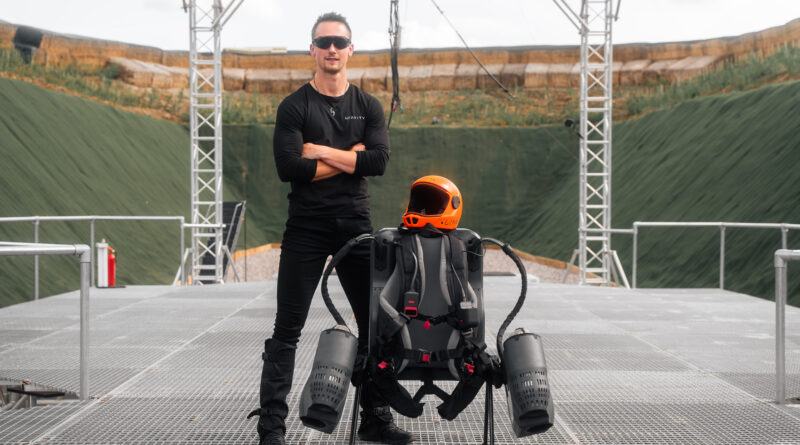
When people watch Louis Skupien hover in the Gravity Industries Jet Suit, they see the polished moment of triumph — the 14 seconds where man and machine fused, and gravity briefly gave way. It looks effortless, even cinematic. But what they don’t see are the countless hours that came before that flight: the nerves before ignition, the awkward first runs, the crashes, the fatigue, and the quiet self-doubt that comes from pushing into uncharted territory.
This is the part of the story Louis insists on telling. Because without the struggle, the flight has no meaning.
The Power of Showing the Struggle
Most aviation milestones are remembered for the instant of success — the photograph, the first lift-off, the quote that goes down in history. The Wright brothers’ 12-second flight, Chuck Yeager breaking the sound barrier, Neil Armstrong’s first step on the moon. But behind each of those moments were years of trial, error, and uncertainty.
Louis wanted to honor that lineage — not by glamorizing flight, but by showing what it really takes to get there. “The journey doesn’t start at the peak; it starts in the trenches,” he explained. His documentary reveals the unfiltered reality behind the Jet Suit: the shakes in his hands before takeoff, the bruises from practice, the exhaustion of controlling 1,300 horsepower strapped to his arms and legs.
It’s a kind of honesty rarely seen in modern storytelling — especially in an era where success is often presented as clean and immediate. By exposing the mess, the nerves, and the moments when things didn’t work, Louis reframes achievement as something raw, human, and earned.
The flight itself lasts only seconds. But the story of how he got there lasts a lifetime.
Why Struggle Creates Connection
Perfection might inspire admiration, but vulnerability builds connection. Viewers relate to struggle because they recognize themselves in it. The Jet Suit documentary could have easily been just a viral highlight — “man hovers like Iron Man” — destined for a few million views and a short online lifespan. Instead, the choice to spotlight the failures and learning process gives the story depth and meaning.
“I didn’t want a highlight reel,” Louis said. “I wanted people to feel the transformation — to see the nerves, the doubt, and then the breakthrough.”
That decision makes all the difference. By watching him falter, recalibrate, and rise again, audiences experience not just a spectacle, but a journey. They don’t just witness innovation; they feel it. They sense the stakes — the heat of the turbines, the mental focus it takes to hover, the fear that one wrong move could end the experiment.
In those vulnerable moments, the story transforms from performance into proof. It becomes a mirror for anyone who’s ever faced an impossible challenge — whether in business, art, or life — and decided to keep going anyway.
Turning Struggle Into Legacy
By showing the raw process, Louis isn’t just telling his own story — he’s building a legacy that brands, networks, and audiences can align with. Authenticity is currency in the modern media landscape, and the willingness to show imperfection makes his journey more valuable than any perfectly edited success clip.
For sponsors, that transparency translates into credibility. For viewers, it becomes motivation. For aviation and technology communities, it’s a living example of what disciplined human innovation looks like.
The project becomes bigger than one man learning to fly. It becomes a study in persistence — a case for why every great advancement begins with someone willing to fail in public and keep moving anyway.
That’s why the struggle matters more than the hover. Because the struggle is where the story becomes universal. It’s where audiences find inspiration, investors see integrity, and history finds its human heart.
Conclusion: Why We Need the Struggle
The Jet Suit documentary isn’t a celebration of effortless success. It’s a celebration of resilience — of every fall that came before the flight, every adjustment made in midair, and every quiet moment of doubt turned into determination.
By pulling back the curtain on the hard parts, Louis Skupien turns a 14-second hover into something much larger: a reflection on what it means to try, to fail, and to rise — not just once, but over and over until gravity finally gives way.
In the end, the true achievement isn’t flight itself. It’s the courage to keep stepping toward it.