
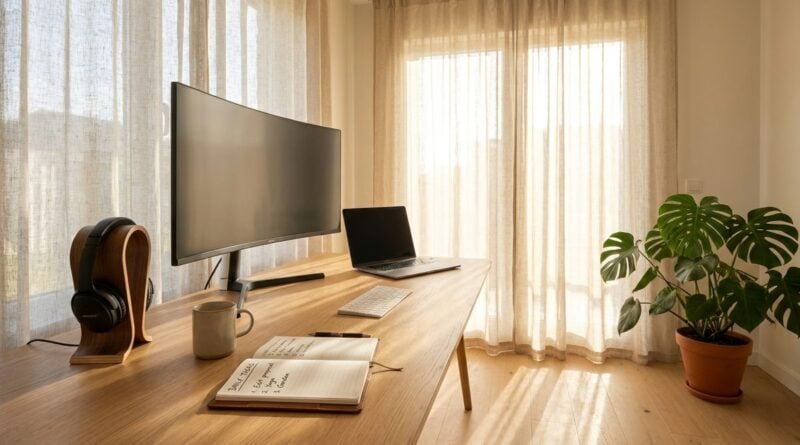
Setting Up a Practical Home Office for Remote Consulting
Working from home presents a unique balancing act between domestic comfort and professional rigor. When you decide to run an independent advisory practice or handle high-level remote projects from a residential space, the environment you build around yourself dictates your daily discipline. A kitchen table or a makeshift laptop perch on the sofa might suffice for an afternoon, but sustaining an independent professional practice requires deliberate planning.
Transforming a spare bedroom, an attic nook, or a designated alcove into a dedicated base of operations allows you to establish a clear boundary between personal obligations and client responsibilities. The goal is to craft a space that feels calm, organized, and capable of supporting deep cognitive work throughout the week.
Separating Professional Focus from Domestic Life
The greatest hurdle in any home-based career is the porous border between household life and professional commitments. When your workspace sits in direct view of unfinished household chores or high-traffic family corridors, your concentration splinters. Establishing physical separation creates an immediate mental trigger that signals the start of the workday.
If a separate room with a closing door is available, prioritize that space over an open floor plan. A door provides more than acoustic privacy during client calls; it serves as a psychological checkpoint. Closing the door at the start of your workday informs housemates that you are unavailable, while shutting it in the evening prevents work anxieties from spilling into your evening routine.
When square footage is limited and a private room is not an option, visual screening can achieve a similar effect. A folding privacy divider, a well-positioned bookcase, or even a heavy curtain can delineate your work area from the living room. Maintaining order in the surrounding home is equally vital, because physical chaos in nearby rooms easily bleeds into your mental space. Integrating simple domestic habits, such as following a realistic weekly cleaning routine for busy homes, ensures that household clutter never competes with your professional priorities during business hours.
Investing in Ergonomics and Intentional Design
A functional workspace is defined by how well it supports the human body over prolonged periods of sustained effort. Fatigue and physical strain often arise not from heavy labor, but from subtle, repetitive poor posture. Selecting furniture designed for physical alignment should take precedence over purely decorative pieces.
Begin with a chair that offers adjustable lumbar support, seat depth, and armrest height. Your feet should rest flat on the floor, with knees comfortably bent and elbows resting level with your work surface. A solid desk with adequate legroom allows you to shift positions naturally without bumping into frames or storage drawers.
Lighting also deserves careful consideration. Placing your desk perpendicular to a window minimizes screen glare while maximizing exposure to natural daylight, which helps sustain energy throughout the day. Complement daylight with an adjustable task lamp that casts a warm, focused glow over your paperwork and notebook.
To keep your focus sharp and your work area uncluttered, prioritize a few foundational elements:
- An ergonomic desk chair with adjustable lumbar support and height settings
- A secondary monitor positioned at natural eye level
- A dedicated task lamp with warm, diffused illumination to reduce eyestrain
- An integrated cable tray or clips to keep power cords hidden and organized
- A compact storage drawer for notebooks, writing instruments, and reference materials
Keeping your physical surface clear of extraneous objects encourages calm thinking. When every tool has a home, you waste less time searching for notes and more time focusing on meaningful client deliverables.
Structuring Daily Habits for Long-Term Career Success
A well-appointed room provides the container, but deliberate habits provide the momentum. Working outside a conventional corporate building requires an internal compass to guide your career forward. Without direct supervision or spontaneous watercooler conversations, you must actively steer your professional growth and cultivate ongoing industry awareness.
Treating your home schedule with the same respect you would give an external executive office is paramount. Establish consistent working hours, take structured breaks away from screens, and dedicate regular intervals to professional learning. Staying attuned to current market demands, hiring expectations, and modern workplace standards helps keep your skills sharp and marketable. Reading career development resources like Jobs In Macon GA provides helpful perspectives on interview strategy, career advancement, and evolving employment trends that independent professionals can adapt to stay competitive.
Equally important is proactive communication. When working remotely, out of sight can inadvertently lead to missed opportunities. Schedule regular touchpoints with peers, participate in industry discussions, and maintain genuine professional relationships. Cultivating an outward-looking mindset prevents the isolation that can occasionally accompany solo work.
Building Client-Ready Operations from Your Desk
Transitioning from a general remote worker to an independent advisor or consultant demands an operational shift. Clients do not simply hire you for your time; they seek clarity, direction, and structured problem-solving. Your home base must function as a dependable hub where inquiries turn into well-defined projects and measurable client value.
Begin by establishing transparent workflows for onboarding, project tracking, and communication. Prepare standardized templates for proposals, scopes of work, and project summaries so you do not have to reinvent your administrative processes with every new engagement. Clear systems convey authority and reassure clients that their investments are in capable hands.
Turning personal expertise into a sustainable consulting practice also requires strategic positioning. You must determine how to package your knowledge, establish reliable revenue structures, and deliver consistent outcomes. Seeking out guidance from experienced advisory platforms such as business-soudan.com can help clarify how to transform strategic insight into dependable business revenue while building operations on your own terms.
When your administrative tasks run smoothly, you can dedicate your best energy to delivering exceptional client work. High-quality deliverables and dependable communication create the word-of-mouth recommendations that sustain an independent practice over the long haul.
Maintaining Boundaries Between Work and Rest
One of the most persistent hazards of working where you live is the temptation to remain perpetually on call. When your desk is only steps away from your kitchen or bedroom, an evening walk through the hallway can easily turn into an unscheduled session of answering emails or reviewing documents. Over time, this constant accessibility diminishes creative energy.
Establish a firm end-of-day ritual to signify that business hours have concluded. This might involve saving your working documents, writing a brief task list for tomorrow morning, powering down your secondary monitor, and physically closing your office door. Once that boundary is drawn, step away and shift your attention entirely to family, hobbies, and personal restoration.
A sustainable career is built on balanced rhythms rather than endless hours at a keyboard. By creating a physical space dedicated to focused accomplishment, pairing it with consistent routines, and maintaining clear boundaries, you can cultivate an independent professional life that enriches your home rather than overtaking it.
